
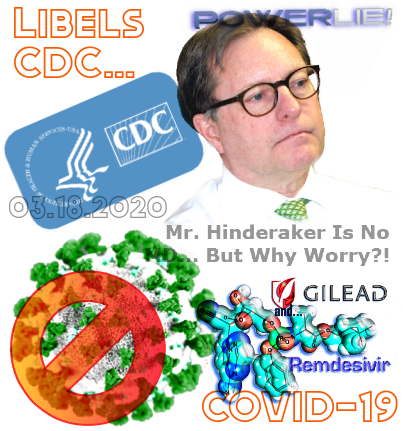
 Tonight we are “treated” to Hinderaker’s unhinged opinion that mask mandates are beyond the reach of the federal health emergency regulations, due to “erh… constitution” — with no citations to cases or sections. All while record numbers fall dead in his “freedom loving” territories — filled with… bears of very little brains called… Dakotans.
John ignores a century of federal orders (all upheld by the courts, uniformly) to quarantine various people with particularly communicable diseases, the federal emergency powers (no looting/curfews, lock-downs and evacuations) we see in natural disaster relief efforts — and perhaps most tellingly, but most benignly… our seat-belt laws. But let us focus on public health policies, directly.
All Mr. Biden need do, on his first day in office, is label COVID-19 a national disaster, and a health emergency. Then as Commander in Chief, under dozens of already passed statutes, he may impose temporary orders — including a vaccine mandate, when one becomes available. But to start with, he may fine people who enter public spaces without a mask.
 They are impeding interstate commerce and he has nearly plenary power to make safe the public spaces for continued commerce.
John just has forgotten what little law he once knew. He always was just a smile and a haircut. Please John — read on:
Just last term (May 2020, in a case out of California), the Chief Justice offered us this, in his concurring opinion, and consistent with judicial modesty, he leaves such questions not to courts, but to officials accountable to the people from time to time at the ballot box, thus:
“…The precise question of when restrictions on particular social activities should be lifted during the pandemic is a dynamic and fact-intensive matter subject to reasonable disagreement. Our Constitution principally entrusts “[t]he safety and the health of the people” to the politically accountable officials of the States “to guard and protect.” Jacobson v. Massachusetts, 197 U. S. 11, 38 (1905). When those officials “undertake[ ] to act in areas fraught with medical and scientific uncertainties,” their latitude “must be especially broad.” Marshall v. United States, 414 U. S. 417, 427 (1974). Where those broad limits are not exceeded, they should not be subject to second-guessing by an “unelected federal judiciary,” which lacks the background, competence, and expertise to assess public health and is not accountable to the people. See Garcia v. San Antonio Metropolitan Transit Authority, 469 U. S. 528, 545 (1985)….”
It would seem no leap at all to say if the government can keep churches from gathering in excessive concentrations (in the above case), then mandating the largely non-intrusive, simple act of wearing a mask is well inside the “especially broad” right to exercise of powers above.
See also, existing (since 2003 under Bush 43, post 9/11) Executive Order No. 13674, §1, July 31, 2014, 79 F.R. 45671:
 “…By the authority vested in me as President by the Constitution and the laws of the United States of America, including section 361(b) of the Public Health Service Act (42 U.S.C. 264(b)), it is hereby ordered as follows:
Section 1. Based upon the recommendation of the Secretary of Health and Human Services (the “Secretary”), in consultation with the Surgeon General, and for the purpose of specifying certain communicable diseases for regulations providing for the apprehension, detention, or conditional release of individuals to prevent the introduction, transmission, or spread of suspected communicable diseases, the following communicable diseases are hereby specified pursuant to section 361(b) of the Public Health Service Act:
(a) Cholera; Diphtheria; infectious Tuberculosis; Plague; Smallpox; Yellow Fever; and Viral Hemorrhagic Fevers (Lassa, Marburg, Ebola, Crimean-Congo, South American, and others not yet isolated or named).
(b) Severe acute respiratory syndromes, which are diseases that are associated with fever and signs and symptoms of pneumonia or other respiratory illness, are capable of being transmitted from person to person, and that either are causing, or have the potential to cause, a pandemic, or, upon infection, are highly likely to cause mortality or serious morbidity if not properly controlled. This subsection does not apply to influenza.
(c) Influenza caused by novel or reemergent influenza viruses that are causing, or have the potential to cause, a pandemic.
Sec. 2. The Secretary, in the Secretary’s discretion, shall determine whether a particular condition constitutes a communicable disease of the type specified in section 1 of this order.
Sec. 3. The functions of the President under sections 362 and 364(a) of the Public Health Service Act (42 U.S.C. 265 and 267(a)) are assigned to the Secretary.
 Sec. 4. This order is not intended to, and does not, create any right or benefit enforceable at law or equity by any party against the United States, its departments, agencies, entities, officers, employees or agents, or any other person.
Sec. 5. Executive Order 12452 of December 22, 1983, is hereby revoked….”
Sit down Hinderaker — your bacon is… burnt.

